Part of L: Antineoplastic and immunomodulating agents.
Toxicity sets the dose, not efficacy. Dose-limiting toxicity is a binary readout in a short early window [1,2]. For cytotoxics, neutropenia is the continuous alternative, captured by semi-mechanistic myelosuppression models with a proliferating compartment, maturation transit compartments and a feedback term [3,4].
Efficacy is modeled in two steps. A longitudinal tumor size model (RECIST sum of diameters) balances drug-driven shrinkage against regrowth [5,6]; quantities derived from it feed a time-to-event analysis of survival [7,8]. That is what lets early imaging inform an endpoint reading out much later [9,10].
Antibodies are nonlinear where it matters. Target-mediated drug disposition makes binding itself an elimination pathway that saturates [11,12], so a model fitted only to the top of the dose range will mislead at the bottom [13]. Antibody-drug conjugates add conjugate, total antibody and payload as separate analytes [14,15].
Cell therapies replace PK with cellular kinetics. A living product expands, contracts and persists [16,17], and the administered dose is a weak predictor of the exposure that follows [18].
Covariates carrying dosing guidance. DPYD for fluoropyrimidines, TPMT and NUDT15 for thiopurines, UGT1A1 for irinotecan, CYP2D6 for tamoxifen [19,20].
CAR T cell therapy
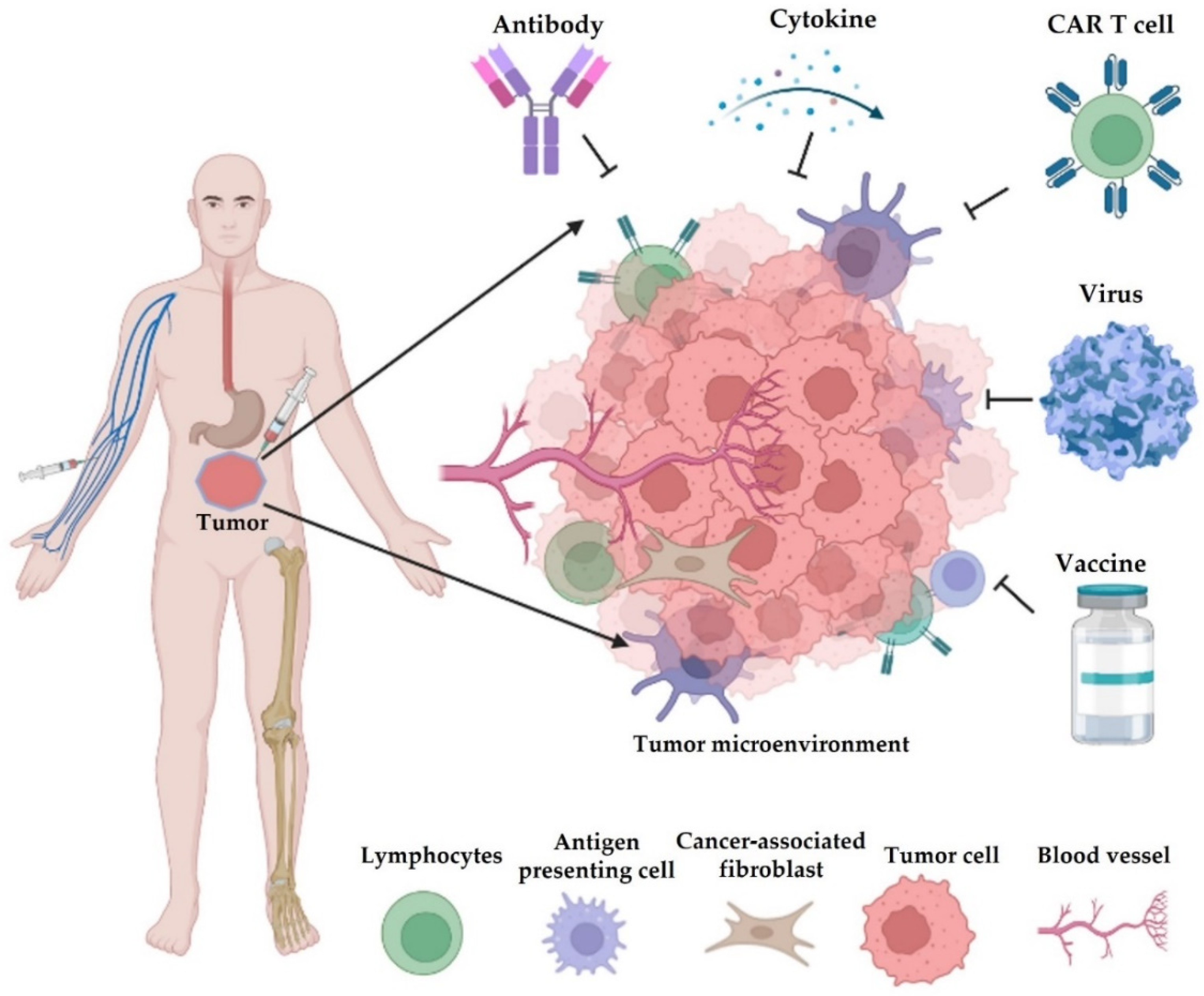
Emily Whitehead, the first child treated with CD19-directed CAR T cells for refractory acute lymphoblastic leukemia, entered a durable complete remission [21].
References
[1]
Le Tourneau C, Lee JJ, Siu LL. Dose escalation methods in phase i cancer clinical trials. JNCI: Journal of the National Cancer Institute 2009;101:708–20.
https://doi.org/10.1093/jnci/djp079.
[2]
Yin Z, Mander AP, Bono JS de, Zheng H, Yap C. Handling incomplete or late-onset toxicities in early-phase dose-finding clinical trials: Current practice and future prospects. JCO Precision Oncology 2024.
https://doi.org/10.1200/PO.23.00441.
[3]
Friberg LE, Henningsson A, Maas H, Nguyen L, Karlsson MO. Model of chemotherapy-induced myelosuppression with parameter consistency across drugs. Journal of Clinical Oncology 2002;20:4713–21.
https://doi.org/10.1200/JCO.2002.02.140.
[4]
Câmara De Souza D, Craig M, Cassidy T, Li J, Nekka F, Bélair J, et al. Transit and lifespan in neutrophil production: Implications for drug intervention. Journal of Pharmacokinetics and Pharmacodynamics 2018;45:59–77.
https://doi.org/10.1007/s10928-017-9560-y.
[5]
Ribba B, Holford NHG, Magni P, Trocóniz I, Gueorguieva I, Girard P, et al. A review of mixed-effects models of tumor growth and effects of anticancer drug treatment used in population analysis. CPT: Pharmacometrics & Systems Pharmacology 2014;3:1–10.
https://doi.org/10.1038/psp.2014.12.
[6]
Stein WD, Figg WD, Dahut W, Stein AD, Hoshen MB, Price D, et al. Tumor growth rates derived from data for patients in a clinical trial correlate strongly with patient survival: A novel strategy for evaluation of clinical trial data. The Oncologist 2008;13:1046–54.
https://doi.org/10.1634/theoncologist.2008-0075.
[8]
Bruno R, Mercier F, Claret L. Evaluation of tumor size response metrics to predict survival in oncology clinical trials. Clinical Pharmacology & Therapeutics 2014;95:386–93.
https://doi.org/10.1038/clpt.2014.4.
[9]
Claret L, Girard P, Hoff PM, Van Cutsem E, Zuideveld KP, Jorga K, et al. Model-based prediction of phase III overall survival in colorectal cancer on the basis of phase II tumor dynamics. Journal of Clinical Oncology 2009.
https://doi.org/10.1200/JCO.2008.21.0807.
[10]
Chan P, Marchand M, Yoshida K, Vadhavkar S, Wang N, Lin A, et al. Prediction of overall survival in patients across solid tumors following atezolizumab treatments: A tumor growth inhibition-overall survival modeling framework. CPT: Pharmacometrics & Systems Pharmacology 2021.
https://doi.org/10.1002/psp4.12686.
[11]
Mager DE, Jusko WJ. General pharmacokinetic model for drugs exhibiting target-mediated drug disposition. Journal of Pharmacokinetics and Pharmacodynamics 2001.
https://doi.org/10.1023/A:1014414520282.
[12]
Dua P, Hawkins E, Graaf PH van der. A tutorial on target-mediated drug disposition (TMDD) models. CPT: Pharmacometrics & Systems Pharmacology 2015.
https://doi.org/10.1002/psp4.41.
[13]
Gibiansky L, Gibiansky E, Kakkar T, Ma P. Approximations of the target-mediated drug disposition model and identifiability of model parameters. Journal of Pharmacokinetics and Pharmacodynamics 2008.
https://doi.org/10.1007/s10928-008-9102-8.
[14]
Li C et al. Impact of physiologically based pharmacokinetics, population pharmacokinetics and pharmacokinetics/pharmacodynamics in the development of antibody-drug conjugates. The Journal of Clinical Pharmacology 2020.
https://doi.org/10.1002/jcph.1720.
[16]
Liu C et al. Model-based cellular kinetic analysis of chimeric antigen receptor-t cells in humans. Clinical Pharmacology & Therapeutics 2021.
https://doi.org/10.1002/cpt.2040.
[17]
Stein AM et al. Tisagenlecleucel model-based cellular kinetic analysis of chimeric antigen receptor-t cells. CPT: Pharmacometrics & Systems Pharmacology 2019.
https://doi.org/10.1002/psp4.12388.
[18]
He JZ et al. A consideration of fixed dosing versus body size-based dosing strategies for chimeric antigen receptor t-cell therapies. Clinical Pharmacology in Drug Development 2022.
https://doi.org/10.1002/cpdd.1171.
[19]
Kicken MP, Deenen MJ, Wekken AJ van der, Borne BEEM van den, Heuvel MM van den, Heine R ter. Opportunities for precision dosing of cytotoxic drugs in non-small cell lung cancer: Bridging the gap in precision medicine. Clinical Pharmacokinetics 2025;64:511–31.
https://doi.org/10.1007/s40262-025-01492-6.
[20]
Chatelut E, Bruno R, Ratain MJ. Intraindividual pharmacokinetic variability: Focus on small-molecule kinase inhibitors. Clinical Pharmacology & Therapeutics 2018.
https://doi.org/10.1002/cpt.937.
[21]
Grupp SA, Kalos M, Barrett D, Aplenc R, Porter DL, Rheingold SR, et al. Chimeric antigen receptor-modified
T cells for acute lymphoid leukemia. New England Journal of Medicine 2013;368:1509–18.
https://doi.org/10.1056/NEJMoa1215134.