Tuberculosis (TB)
What is TB?
Tuberculosis (TB) is an infectious disease caused by bacteria (Mycobacterium tuberculosis). While TB usually affects the lungs, it can also involve the kidneys, brain, spine and skin. TB spreads through airborne droplets when people with TB cough, sneeze or spit. About 25% of the global population is estimated to have been infected with TB bacteria. Those who are infected but free of disease cannot spread it. About 7.5% of people infected with TB will eventually get symptoms and develop TB disease. If left untreated, active TB disease kills around 50% of those affected.
People living with HIV are ~16 times more likely to fall ill with TB disease than people without HIV. TB is the leading cause of death among people with HIV. HIV and TB form a lethal combination, each speeding the other’s progress.
Mycobacterium tuberculosis has been suggested to exist in three states, showcased in Figure 1 (Clewe et al. 2016).
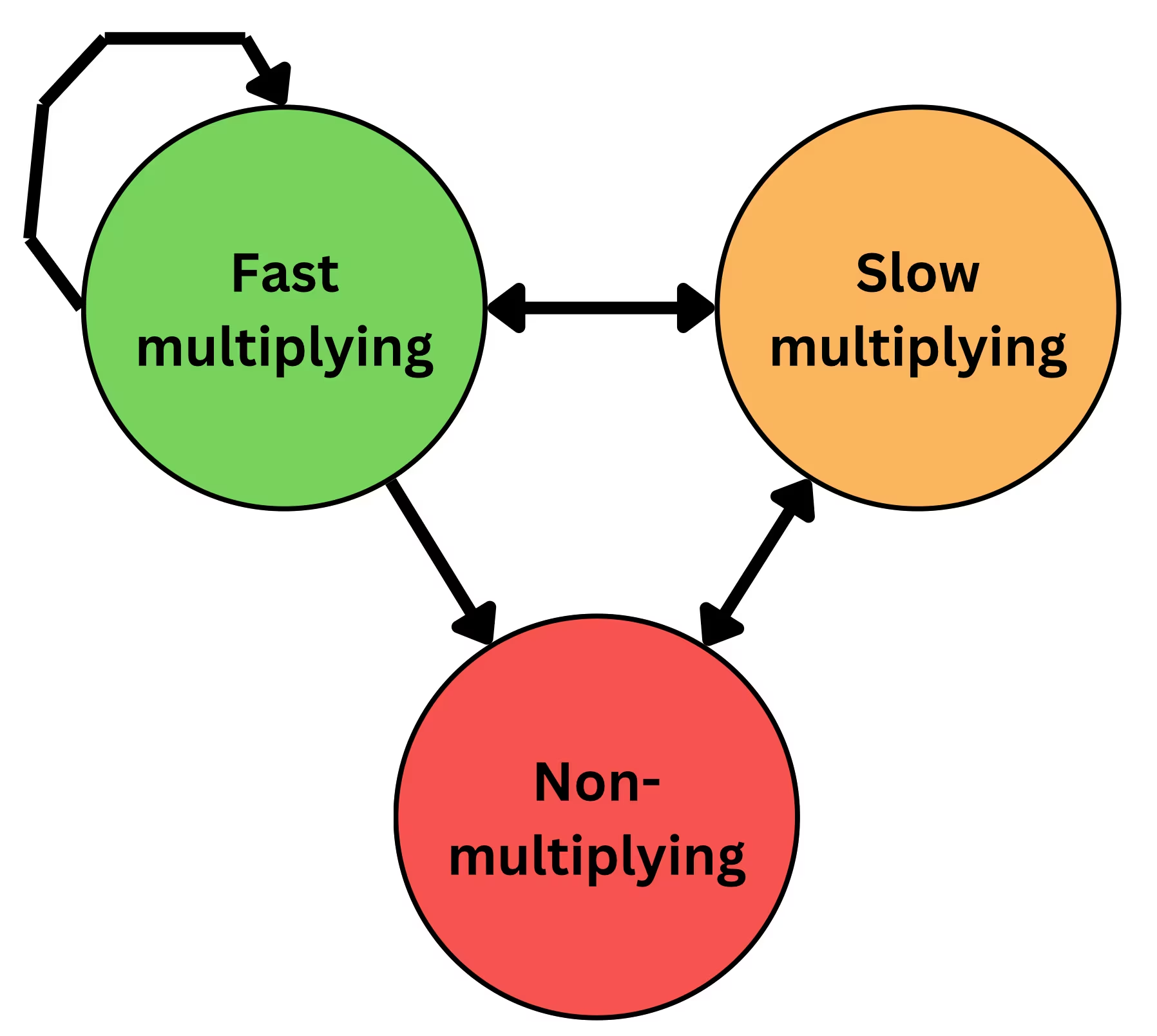
Drug resistant TB
Mycobacterium tuberculosis divides more slowly (~q18h) than most bacteria, making development of antibiotic resistance more likely. In addition, the mycolic acids in its cell wall limit the effectiveness of some antibiotics.
Multidrug-resistant TB (MDR-TB) has been defined as resistance to rifampicin plus isoniazid.
Extensively drug-resistant TB (XDR-TB) describes resistance to at least one fluoroquinolone as well as bedaquiline and/or linezolid and/or a second-line injectable in addition to rifampicin and isoniazid.
What are the symptoms?
The symptoms people get depend on which part of the body is affected by TB.
- Prolonged cough (sometimes with blood) 😮💨
- Chest pain 🫁💥
- Weakness 😩
- Fatigue 😩
- Weight loss 📉
- Fever 🤒
- Loss of apetite 🍽️
Typical patient population
Low- and middle-income countries. About half of all people with TB can be found in 8 countries:
- Bangladesh
- China
- India
- Indonesia
- Nigeria
- Pakistan
- Philippines
- South Africa
Risk factors
- Diabetes (high blood sugar)
- Weakened immune system (e.g. HIV/AIDS)
- Malnourishment
- Tobacco use
- Harmful use of alcohol
Diagnosis
A sample of coughed-up mucus (sputum) is collected and tested using the Xpert MTB/RIF Ultra assay (Cepheid, Sunnyvale, USA). This diagnoses TB and detects rifampicin resistance.
TB is particularly difficult to diagnose in children.
Measuring the bacterial load
In treatment trials, sputum also shows how many live bacteria it holds (the bacterial load) and how fast treatment lowers it. One measure is the number of colonies grown from the sample, given as colony-forming units (CFU) per mL of sputum. The other is the time to positivity (TTP), the time until an automated system detects growth in a liquid culture of the sample. In Phase 2a, early bactericidal activity (EBA) studies treat small groups of patients for 14 days to show whether a drug is active in humans and to relate its dose and exposure to how fast it kills the bacteria. EBA is read as the fall in CFU or as the rise in TTP, two highly correlated measures, and TTP is now the primary one, with CFU secondary. Counting colonies is laborious, costly and relatively slow, while TTP is easier to standardize and more sensitive. These repeated CFU and TTP measurements are the usual data that pharmacometric models of treatment response are built on: nonlinear mixed-effects models pool the measurements of all patients, handle samples lost to contamination, and relate drug exposure to response [1].
How can TB be treated?
Tuberculosis is preventable and curable. Treatment is recommended for both TB infection and disease. Active lung (pulmonary) TB is treated with several antibiotics for a minimum of 6 months.
The most common antibiotics used are:
- isoniazid (H, J04AC01)
- rifampicin (R, J04AB02)
- pyrazinamide (Z, J04AK01)
- ethambutol (E, J04AK02)
Drug-susceptible TB (DS-TB) (6 months of treatment)
- 2 months: isoniazid, rifampicin, pyrazinamide, ethambutol (2HRZE)
- 4 months: isoniazid, rifampicin (4HR)
Such a regimen is also spelled as 2HRZE/4HR, meaning 2 months of HRZE treatment followed by 4 months of HR treatment.
For children (3 mo – 16 y), 2HRZ(E)/2HR should be used.
Multi-drug/rifampicin resistant TB (MDR/RR-TB) (6–18 months of treatment)
- 6 months: bedaquiline (J04AK05), pretomanid (J04AK08), linezolid (J01XX08), moxifloxacin (J01MA14) (BPaLM)
The second-line treatment contains bedaquiline, levofloxacin (J01MA12)/moxifloxacin, ethionamide (J04AD03), ethambutol, isoniazid, pyrazinamide and clofazimine (J04BA01) (all-oral regimen) administered for up to 9 months.
Drug characteristics
Delamanid (J04AK06)
Approved 2014 in adults, 2021 in children.
- Oral F decreases at high dose
- AUC ~2.7–4 after meal, dose with food
- 2 CMT PK, with 2 CMT metabolite.
Bedaquiline (J04AK05)
- fb ≈ 99%
- Food effect
- CYP3A4 metabolism
- Most common adverse events: QTc-prolongation, and liver damage (hepatotoxicity)
Linezolid (J01XX08)
- Highly variable PK
- Inhibits its own CL
- F ≈ 100%
- No food effect
- “Non-enzymatic metabolism”
- Known toxicity at higher doses and/or longer durations
Rifampicin (J04AB02)
Old drug.
- Strong enzyme inducer of enzymes and pumps, it thus induces its own CL
- Also saturable biliary excretion -> higher than dose-prop exposures -> F is dose dependent.
Pretomanid (J04AK08)
Approved 2019.
- HL: 14–26 h
- Food effect: AUC +88% (dosed with food)
- Saturated bioavailability (F) at high dose
- 1 CMT PK
Clinical studies
Since most relapses in patients with susceptible bacteria happen within 6 months of the end of treatment, the European Medicines Agency (EMA) guideline allows the primary analysis of a pivotal trial of a regimen meant to shorten treatment to be based on the proportion of patients whose sputum cultures have turned negative and stayed negative (sustained sputum culture conversion), a binary outcome, at a visit at least 6 months after the last dose of the longest regimen in the trial [2].
Clinical pharmacology studies
At least for drugs that kill the bacteria quickly in the laboratory, a short trial of the new drug given alone is usually recommended, unless laboratory data suggest an unacceptable risk of selecting resistant bacteria. Such a trial can, for example, measure the EBA of a range of doses in previously untreated patients whose bacteria are known or expected to be susceptible to all first-line drugs, but EBA does not show whether a drug clears the bacteria that remain (sterilizing activity). For some drugs, the concentration in sputum even 24 h after the last dose could be enough to stop the bacteria growing in culture, giving a falsely negative result although live bacteria remain, so negative cultures during treatment should be backed by laboratory studies of this carryover, which can affect TTP too. Interactions with combination antiretroviral therapy can be a particular difficulty in people who also have HIV, and those whose HIV is adequately treated may be studied separately or in the same trials as people without HIV, provided that interactions or added toxicities are not expected to impair the efficacy of the regimen [2].
References
WHO consolidated guidelines on TB. 2022. https://iris.who.int/bitstream/handle/10665/353829/9789240048126-eng.pdf
Clewe O, Aulin L, Hu Y, Coates ARM, Simonsson USH. A multistate tuber- culosis pharmacometric model: a framework for studying anti-tubercular drug effects in vitro. J Antimicrob Chemother. 2016 Apr;71(4):964–74